• Utility Garden Stool
    (Fall 2019-Winter 2020)

    I designed a utility seat for a home gardening company in a team of 8 senior Mechanical Engineering students. Our goal was to create a novel product or mechanism that would make gardening easier and more enjoyable for hobbyist gardeners over 50.

    We developed three rounds of initial prototypes and one final prototype, each of which we tested with users to redirect and refine our designs. The project involved both engineering analysis and human-centered design, with aspects like comfort and aesthetics having high importance alongside functionality. Although our project was cut short by the COVID-19 pandemic, we were still able to deliver a final CAD design and mostly finished working prototype for the company to further develop.
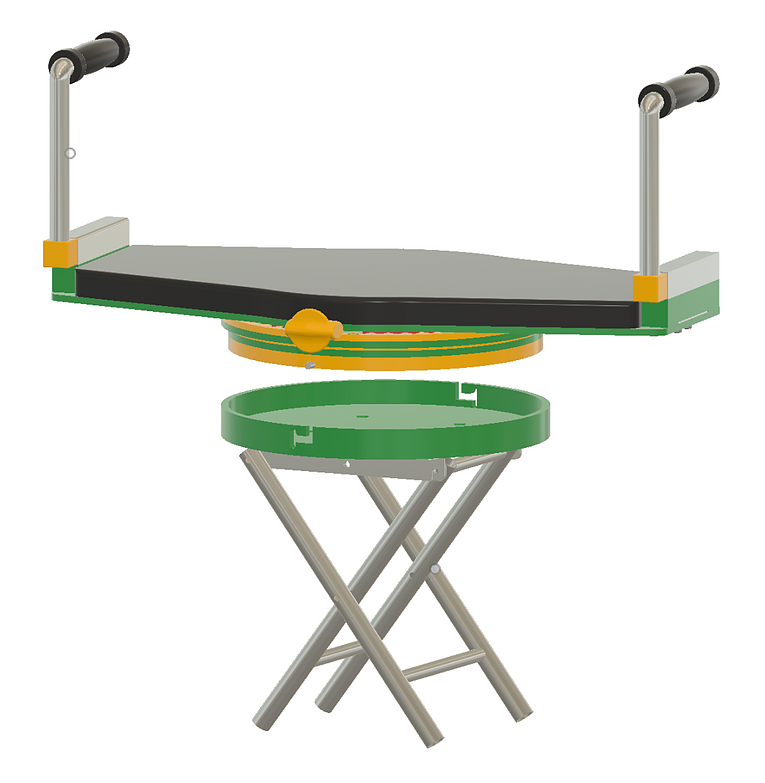
    A CAD model of a swiveling garden stool

    Final Assembly CAD

  • V1C

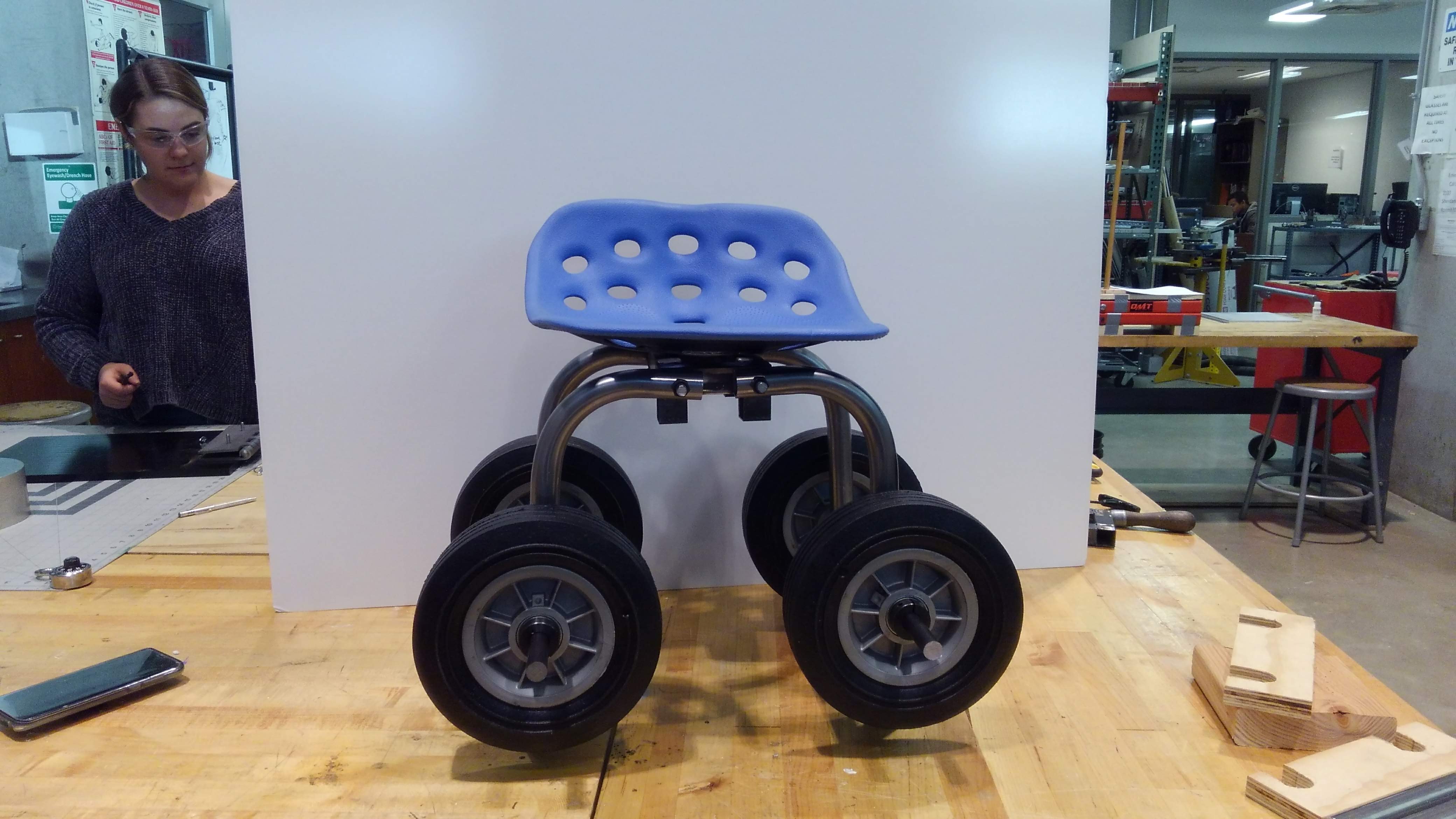
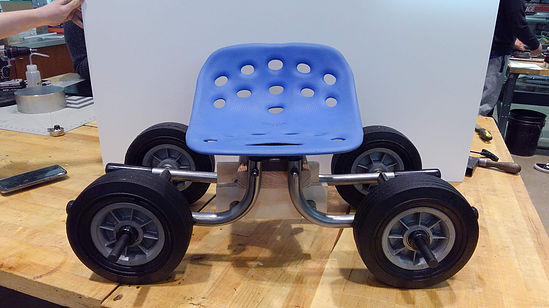
    We divided into sub teams of two to design and build our first prototypes. This prototype was based off of a concept I created where a rolling cart converts into a stool for compact storage and an alternative use case. Both configurations can be seen with the completed prototype above. I worked on designing the cart and also welded the frame and legs.

    • prototype v1c configured as a rolling seat
    • prototype v1c configured as a stool

    Prototype V1C configured as a rolling seat (Left) and a stool (Right)

  • V2C

    While users found our first prototype intriguing, they found it too difficult to use and did not think its multiple configurations were necessary. This feedback drove us to seek out simpler designs that still incorporated novel features.

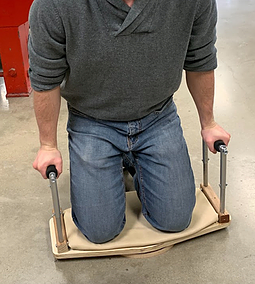
    This prototype was designed to spin, giving users 360º of motion, and to separate from its base to be used as a kneeler.

    • a swivel seat on a tripod
    • the swivel seat used as a kneeler

    Prototype V2C used as a seat (Left) and as a kneeler (Right)

  • V3A

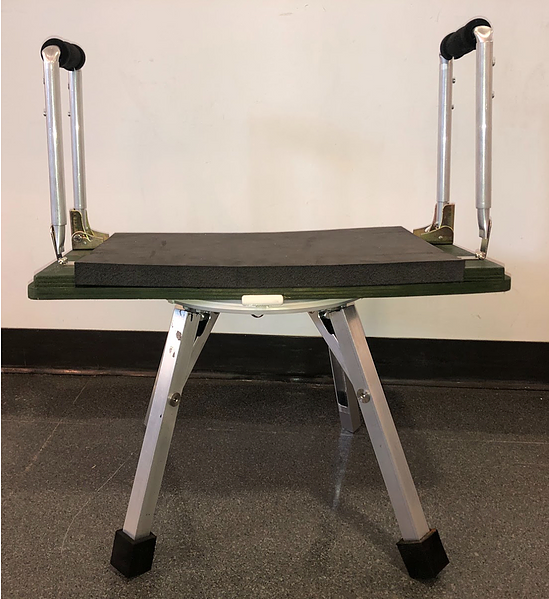
    In the third round, we tried to iron out some of the issues users had with prototype V2C using some new ideas. In prototype V3A, the handles fold down, and the legs also collapse, allowing for flat storage, shipping, and allowing it function as a kneeler without requiring disassembly. Also, a small handle was added to lock the spinning mechanism when not in use.

    For this prototype, I worked on the leg components and their connection to the base. Unfortunately this design was not liked by users because it was difficult to set up and its many moving parts made it unstable.

    • a swivel seat on folding legs
    • the frame of the seat with legs folded flat

    Prototype V3A (Left) and the flat-folded frame (Right)

  • V4

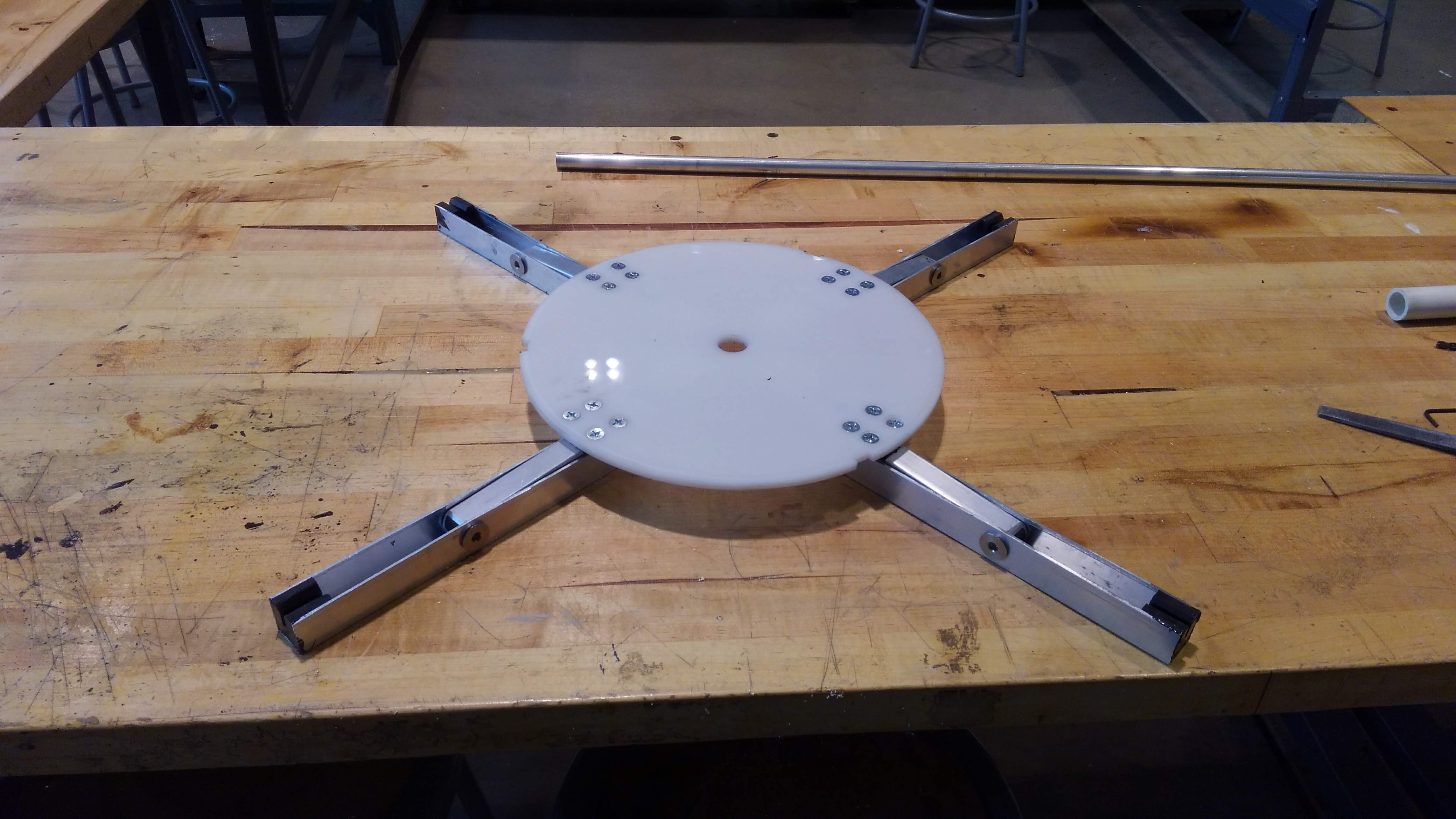
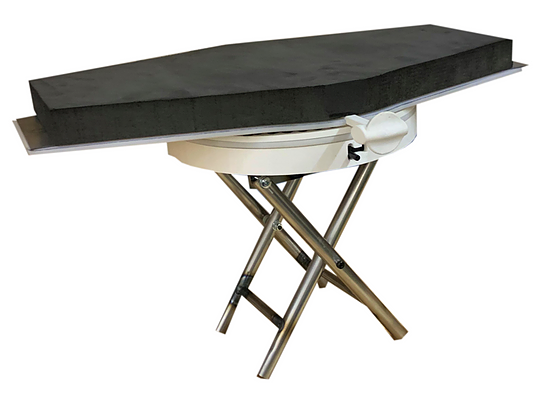
    Our final prototype implemented everything we’d learned from the test prototypes. We switched back to a detachable top design, which this time locked onto the base to allow both to be carried at once. The legs use an x-frame design which allows them to easily fold flat for storage, and handles (though they were never constructed) would have folded flat as well. Rubber anti-sink feet would have also been added.

    For this prototype I designed the leg mechanism and did the welding.

    a swivel seat on x-frame legs

    Prototype V4

    a decorative dingbat